
The US Copper Scrap Market Is Being Rewritten by Tariffs, AI, and a Door to China That's Closing
Published November 9, 2026
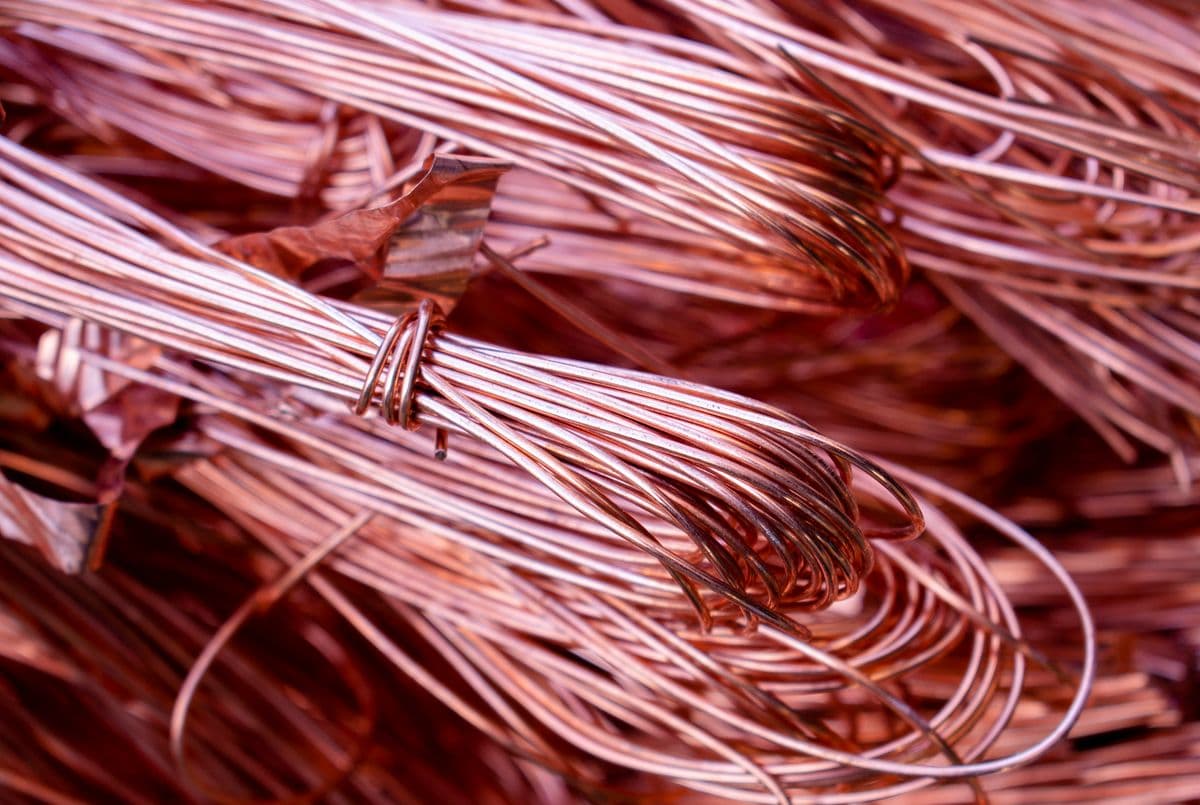
Copper scrap used to be a quiet business. Dealers graded wire, sweated it down, baled it, and shipped the clean grades wherever the mills paid best — often China. In 2026, none of that is quiet anymore. A new tariff regime has turned pricing into a daily guessing game, data centers are rewriting what "quality" even means in a bale of scrap, and Washington is now openly discussing whether the best grades of American copper should be allowed to leave the country at all. For a market that spent decades running on muscle memory, this is a genuinely new era.
Start with the tariffs, because they're the most concrete thing that's happened. On April 2, the White House issued a new Section 232 proclamation that didn't just add copper to the existing steel-and-aluminum framework — it restructured how the duties bite. Articles made almost entirely of copper now carry a flat 50% tariff on their full customs value; derivative products substantially made of copper carry 25%. Crucially, "full customs value" is the operative phrase: the prior approach of taxing only the metal content inside a finished good is gone, which means the tariff bill on a derivative product can be far larger than a naive metal-weight calculation would suggest. A follow-up proclamation in June tightened the domestic-content test further, lowering the threshold for preferential treatment to products made from at least 85% US-smelted-and-cast copper, down from 95% — a smaller, stricter club.
None of that directly taxes scrap exports yet. But it has already done something scrap traders say is just as disruptive: it has made copper pricing swing wildly on tariff-news days rather than on underlying supply and demand. Daily price moves of 14 to 20 cents a pound, once rare, are now described by recyclers as simply "par for the course" — a level of volatility that makes it hard for a yard to price a truckload of scrap with any confidence it will still be a fair price by the time it's baled and sold. Part of that volatility has nothing to do with physical metal at all: hedging volume on the London Metal Exchange reportedly runs around 4 million tons a day, against annual global cathode sales of roughly 21 million tons — meaning a single week of paper trading on the LME can exceed a full year of real supply. When the paper market is that much larger than the physical one, price discovery gets noisy, and scrap dealers are the ones left holding the risk.
The bigger structural story, though, is where American scrap has been going — and where it's increasingly not going. The United States exports somewhere in the neighborhood of 600,000 tons of copper scrap a year, and for a long time more than half of it ended up in China, the world's dominant copper refiner. That flow has been shrinking fast. Industry trade data shows Chinese imports of US-origin copper scrap falling from roughly 441,000 metric tons in 2024 to about 143,000 tons in 2025 — a drop of nearly 70% in a single year — with trade analysts projecting a further collapse toward negligible volumes in 2026. China's own 10% tariff on US-origin scrap, layered onto the broader US-China trade friction, has made direct shipments increasingly uneconomic.
The material hasn't disappeared, though — it's rerouting. US copper scrap exports to ASEAN countries rose from roughly 171,000 tonnes in 2024 to about 223,000 tonnes in 2025, and Southeast Asia's own exports of copper scrap into China grew over the same period. The pattern is consistent with scrap being aggregated, lightly processed, and re-exported through third countries rather than shipped directly — a workaround that adds cost and complexity but keeps material moving toward Chinese smelters that still want it. Whether that route remains viable depends partly on how aggressively Chinese and US trade authorities choose to police transshipment, which is very much an open question.
Then there's the possibility that none of this trade-flow adjustment will matter much longer, because Washington may simply decide to keep the best scrap home. Policy discussions — not yet a formal rule, and nothing has been enacted as of this writing — have floated restricting exports of high-quality copper scrap as early as 2027, on the logic that grid modernization, EV production, AI data-center buildout, and defense manufacturing all need that copper domestically more than any buyer abroad is willing to pay for it. One version under discussion reportedly contemplates a phased duty structure on refined copper exports rather than an outright ban. Industry voices have pushed back on the idea of a blanket restriction specifically — pointing out, reasonably, that the US doesn't have anywhere near enough domestic refining capacity to absorb all its own premium scrap, and that building that capacity "is not a quick process." If scrap can't leave and can't be refined fast enough at home, it just sits as inventory nobody can monetize.
Why does Washington even want to keep it? Because the domestic demand side of this story is not hype — it is showing up in real power and metal consumption numbers. Data centers, driven overwhelmingly by AI buildout, already account for roughly 5% of US electricity demand and are projected by some industry forecasts to reach something like 14% by 2030. Each megawatt of data center capacity is estimated to require on the order of 6 to 8 tons of copper for power distribution, cooling, and backup systems — and the grid infrastructure needed to actually deliver that power to the facility requires several times more copper than the data center itself consumes. Layer on EV adoption and a genuinely overdue wave of grid modernization, and you get a demand picture that several industry analyses now describe as a structural deficit rather than a cyclical one — meaning it's not expected to self-correct the way commodity cycles usually do, because new mine supply takes a decade or more to come online.
That demand is also changing what "good scrap" means. Mills serving the data-center and grid build-out aren't just buying tonnage — they're buying purity, because fine-gauge wire for high-density power distribution needs clean, low-contaminant copper that can be drawn down without failures. Recyclers at this year's industry gatherings describe mills actively competing for the cleanest grades, which rewards yards that invest in sorting and stripping technology and penalizes anyone still shipping mixed, contaminated bales. It's also created an ugly side effect: a rise in reported misrepresentation of copper-clad aluminum wire as premium copper — in some cases with aluminum making up 70% of the actual volume — a fraud problem serious enough that recycling-industry trade press is actively warning dealers to test incoming material rather than trust the label.
For yards and dealers caught in the middle of all this, one thing recyclers themselves point out is almost counterintuitive: well-run operations report a reasonably consistent margin whether copper is trading at $4 or $7 a pound, because their business is the spread between buy and sell, not a directional bet on the metal. Scrap still accounts for roughly 35 to 40% of total US copper consumption — a meaningful share that domestic smelters, increasingly squeezed by what some reports describe as near-zero refining margins under the new tariff structure, need as much as anyone. The dealers who will do best through this stretch are probably not the ones trying to out-guess tariff policy, but the ones treating grading discipline and fraud detection as the actual competitive edge — because that's the one lever in this market that hasn't been handed to Washington or Beijing.